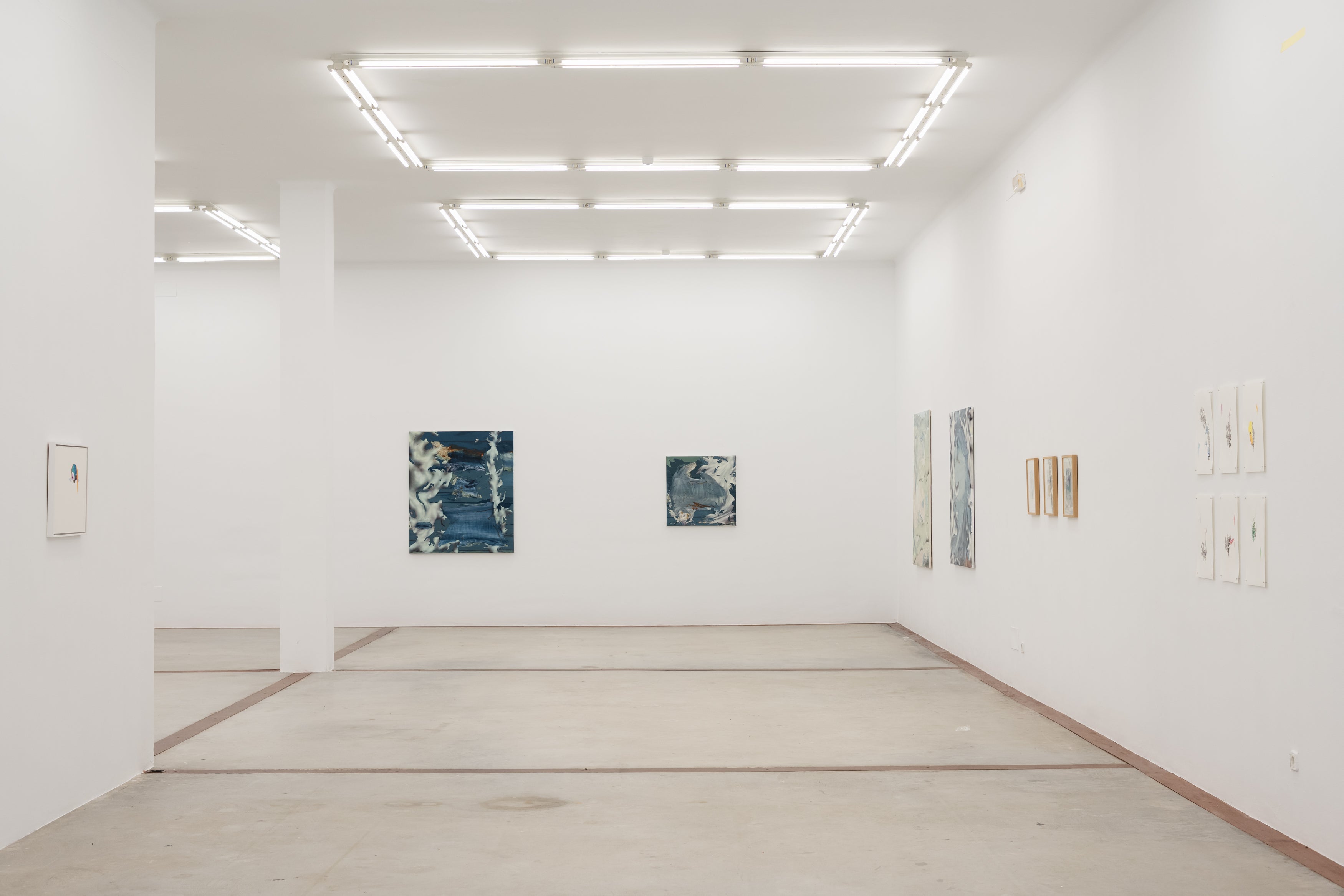
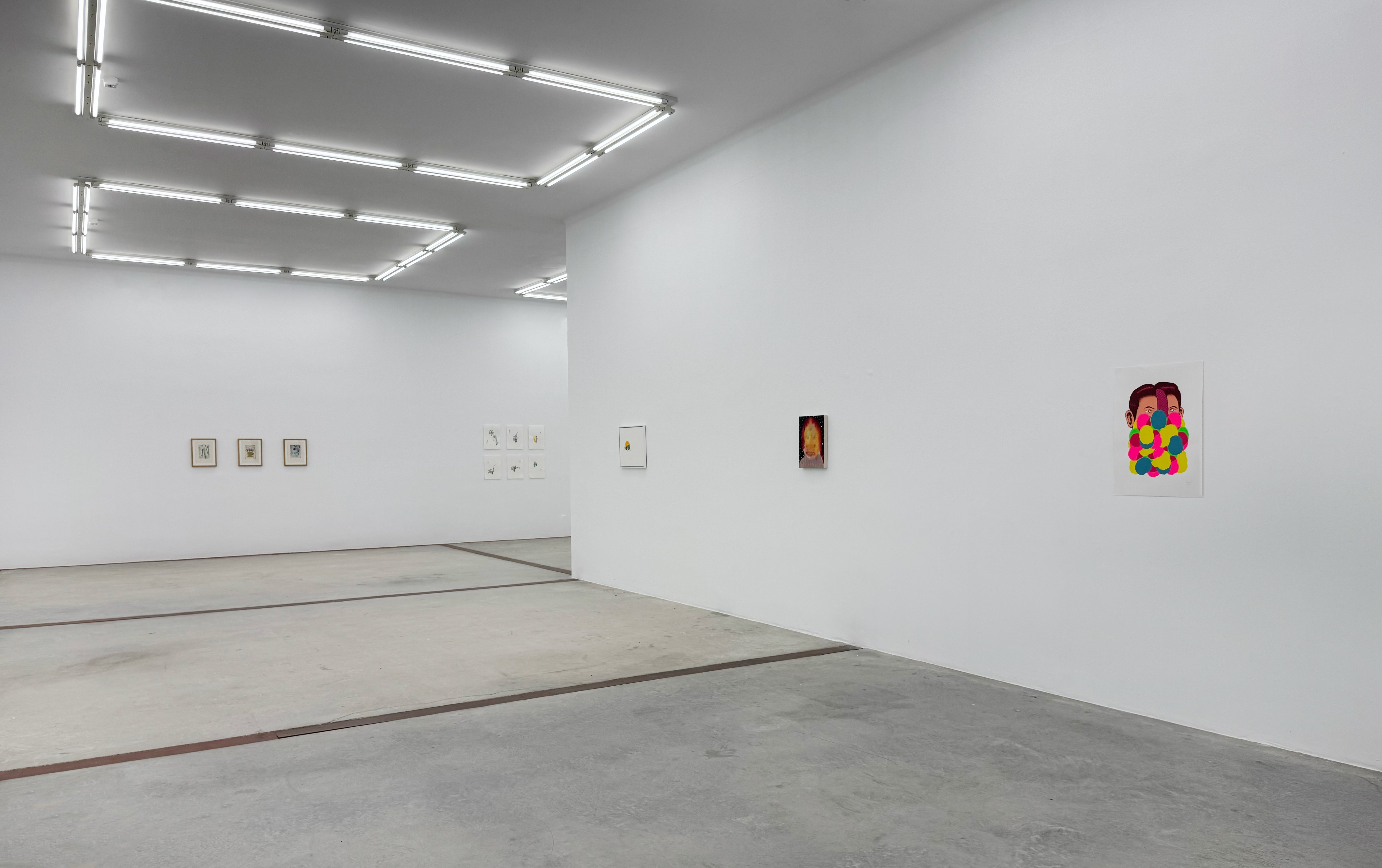
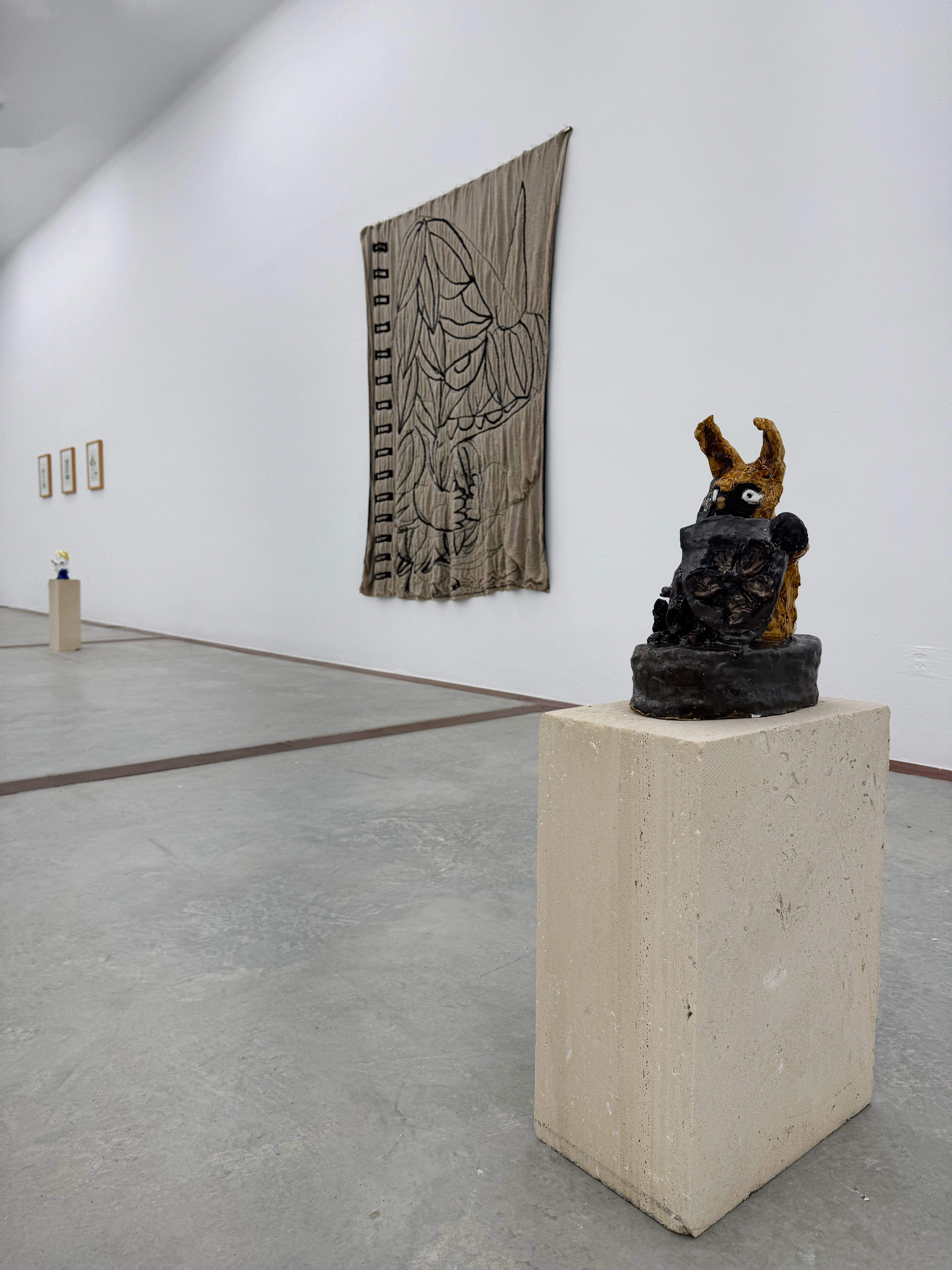
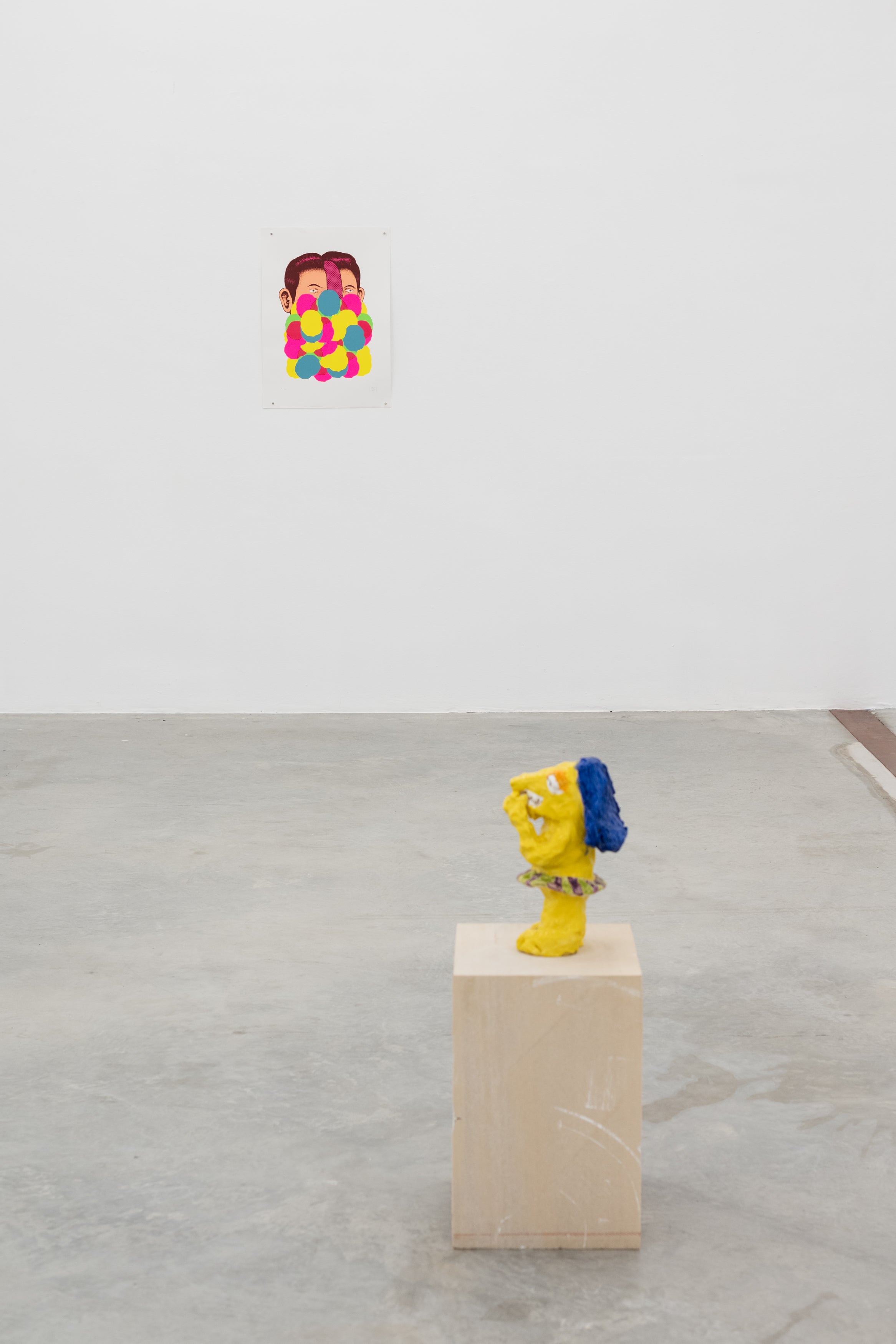
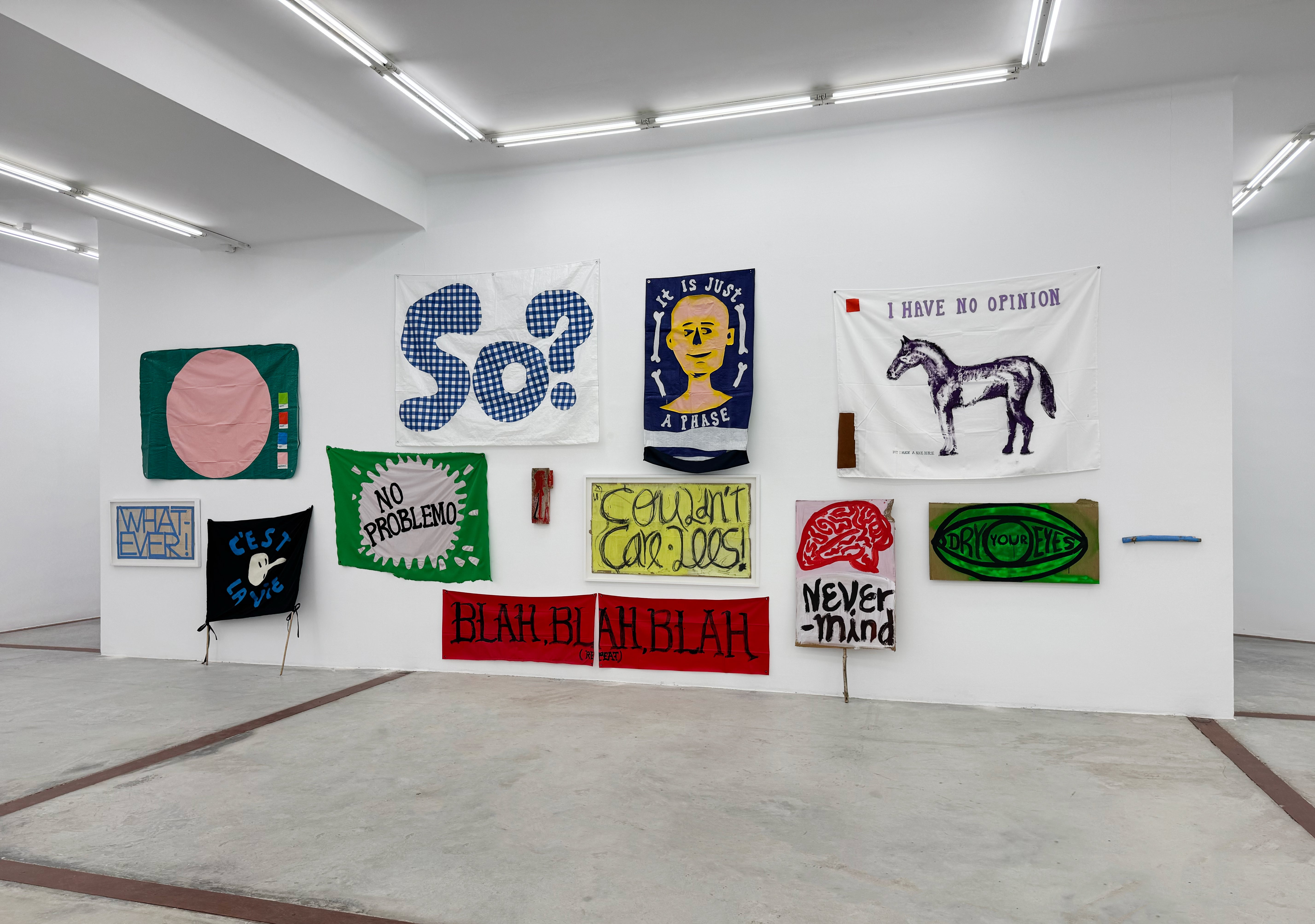
The Alter Monster exhibition drags us into a mental space where the otherness turns into an unstable ground, inhabited by elusive, disturbing, and deeply ambivalent figures. The title itself sets the tone: a fusion of the alter ego and the monster, which confronts us with entities that are neither entirely us nor completely other.
Here, the monster is not simply an object of repulsion. It is something that defies categorization and that disrupts the boundaries of the known—of gender, of the body, of language. In these works, the shapes are hybrid, sometimes grotesque, often indefinable. This ambiguity generates a fundamental anxiety: the inability toname, to recognize. In this way, the monster aligns with a contemporary versionof the uncanny: both familiar and totally different, showing a shadow of the self that we struggle to confront.
In this way, Alter Monster stages otherness experienced both as fear and reflection. The creatures, fragmented avatars of the self, are presented in absurd or fantastical forms, where humor coexists with discomfort. The absurd does not appear here as a form of escape, but as a way of making the invisible visible, of giving body to the unconscious, to what lies beneath the surface. The exhibition becomes a mental theater where impulses, fantasies, and contradictions take shape.
Gender issues are present as territories in transformation. The bodies on display—deformed, metamorphosed, sometimes sexless or multisexual—challenge binary codes and disorient the gaze. The monster becomes an agent of resistance againstt he norm, a critical tool for rethinking collective identities, desires, and fears. Who is the monster? The one who transgresses the rules or the one who imposes them?
At the heart of this exhibition lies a more intimate truth: the alteration of the self and the fear of losing control in the face of what one represses. It is the dark side of each of us, that which escapes us, what we fear becoming. In this sense, the works invoke both the tradition of the grotesque and that of psychoanalysis: the monster is not only in the other, it also dwells in the most secret fold of the self.
From this mask forged in the shadow of ourselves emerges the farce, the comedy of the collective which, in its fruitless attempt to establish rules for peaceful coexistence, ends up generating a society that can also become monstrous.
With its aesthetics of rupture, play, and mutation, Alter Monster proposes a playful reading of our contemporary anxieties. It reveals that the fear of the other is, at its core, a fear of ourselves. By celebrating the undefined, the excessive, the metamorphic, the exhibition does not seek to reassure, but rather to open a fissure—where thought gives way to instinct, emotion, and the imaginary. Where the monster ceases to be an enemy and becomes a guide.