
Artists in Residence: August 2026
Irina Ojovan
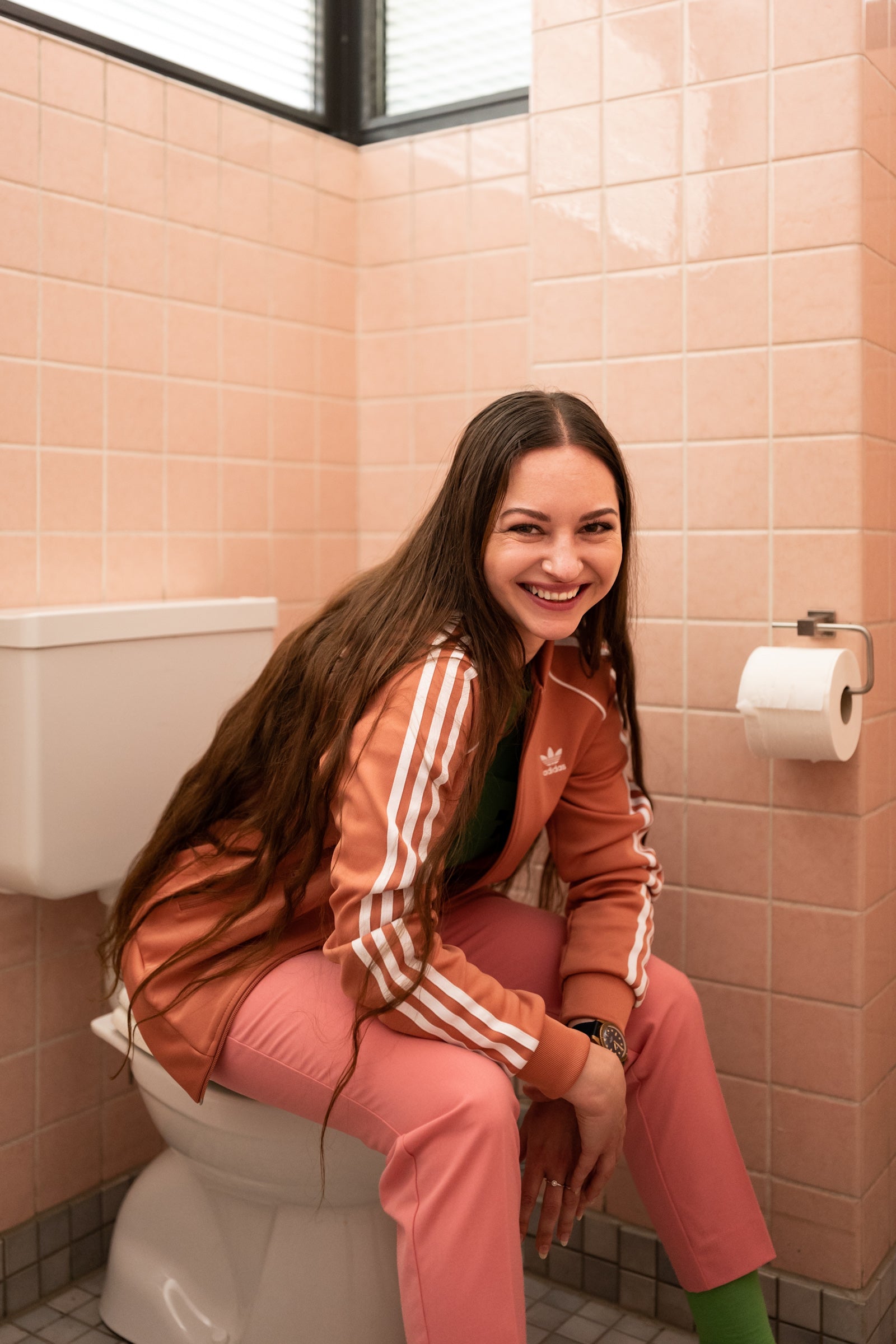
Irina Ojovan (*1988, Chisinau, Republic of Moldova) is a Düsseldorf based artist. She studied at the Academies of Fine Arts in Turin, Rome and Munich, graduating in 2018 as a master student of Gregor Hildebrandt. She has completed residencies at Künstlerhaus Bethanien, Berlin (2019), CCA Andratx, Mallorca (2022), and a Griffelkunst printmaking scholarship in Hamburg (2023). In 2020, she received the Bavarian Art Prize for Visual Arts and exhibited at the Galerie der Künstler in Munich in early 2021. Her work has been exhibited internationally, including at the National Museum of Art of Romania, Skulpturenmuseum Marl, Brücke Museum Berlin, Stadtgalerie Kiel, NRW-Forum/Kunstpalast Düsseldorf, Villa Schöningen, PIN. Auktion at Pinakothek der Moderne Munich, Sotheby’s Munich, The Hole New York, LOOCK Berlin, Cosar Düsseldorf, 10 A.M.ART Milan and is part of the collection of Mgk Otterndorf.
In her painting and sculpture, Ojovan moves in the interplay of materiality, external formality and its inherent meaning. The title Inherited Profiles refers to tools for stucco elements that her father designed in his work as an architect. Appropriated by Ojovan, these profiles, as part of her personal history, become the building blocks of a new visual world and, in a sense, form the synthesis of her cross-temporal worlds of memory. On a formal level, the profile functions as an outline of a form or figure and is at the same time a metaphor for a biography, including her experiences and emotional feelings. Ojovan translates this tension into abstract forms and pictorial compositions reduced to a few geometric surfaces, which open up their own emotional and associative spaces through color and surface texture. Through their reference to architecture, Ojovan’s paintings and sculptures interact with the exhibition space and thus deal with the representation of information versus non-information, emptiness and the limits of the visible.
Claudia Peña Salinas
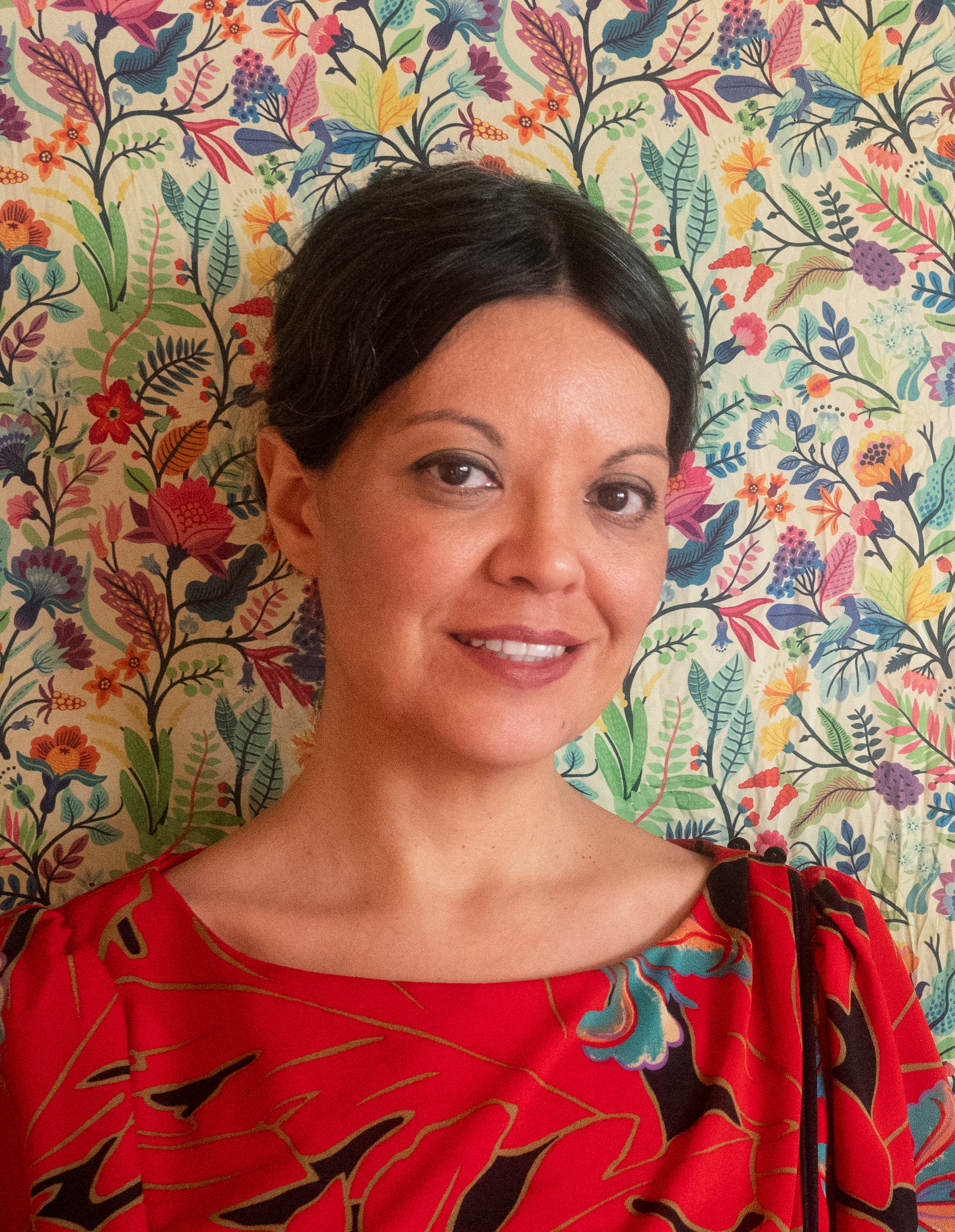
Through the process of documentation, travel, collection, accumulation and discovery Claudia Peña Salinas has developed a significant body of work in sculpture, video, publications and installation that point towards a spatial, material and temporal reflection. The artist situates her work between legacies of Modernism and Indigenous cultures. Highlighing indigenous thinking and worldviews using a contemporary language, she calls attention to the Americas collective cultural memory
Claudia Peña Salinas, born in Mexico in 1975. Lives and works between Brooklyn, New York and Mexico City. Studied at the Art Institute of Chicago and received her MFA from Hunter College, New York (2009). She has exhibited at Museum of Fine Arts St. Petersburg, Florida (2024), Es Baluard Museu d’Art Modern, Mallorca, SP, (2023), Contemporary Art Center, Cincinnati (2022), The High Line, New York (2021), DePaul Art Museum, Chicago (2021), Hessel Museum of Art, Bard College, New York (2021), Centre Pompidou, Paris, FR, (2019), the Arizona State University Art Museum, Arizona, (2019), Whitney Museum of American Art, New York (2018), Eli and Edythe Broad Art Museum, Michigan (2018), Queens Museum of Art, New York (2012), El Museo del Barrio, New York (2005), El Museo de Arte de Puerto Rico (2006), and Museo de Arte Carrillo Gil, Mexico (2015). Residencies and awards include: CCA Andratx, Mallorca, (2023), MacDowell, New Hampshire, (2021), Arizona State University Art Museum, Arizona,(2018), the Lower Manhattan City Council, Process Space, New York (2016), and SOMA residency, Mexico City (2011). She is a recipient of the Jacob K. Javits Fellowship (2007) and Sistema Nacional de Creadores de Arte, Mexico (2020).
Christof John
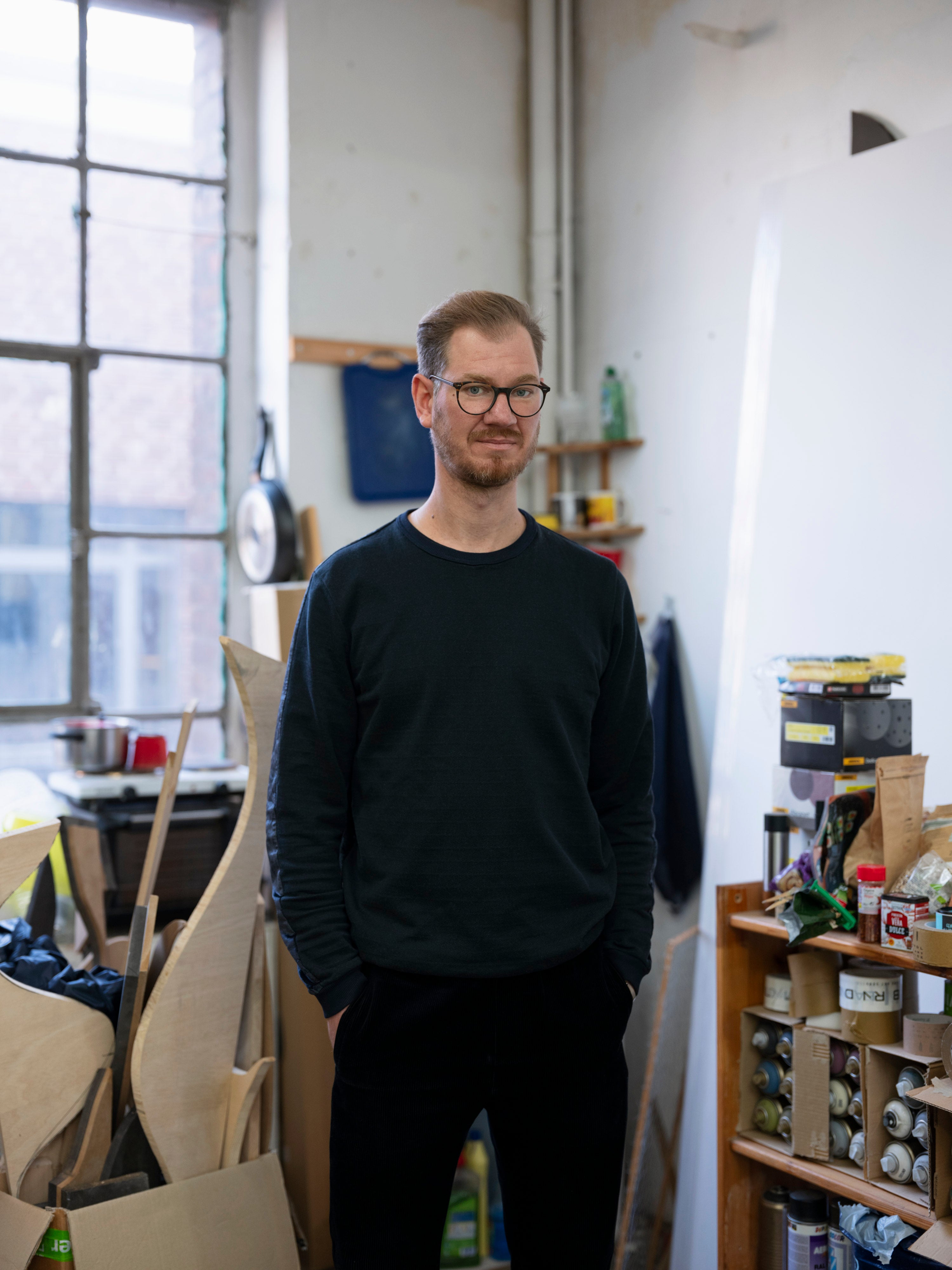
“The idea of a never-ending image drives me on. Freed from the notion of the ‘unknown masterpiece’, the image is rather the manifestation of a more complex overall structure, a part of which – a sequence – settles upon the picture support like a skin. The support – usually wood or MDF – is not merely a background, but an equal material in the creative process. It becomes a formative agent, not merely a stage for the material paint. The jigsaw serves as a drawing tool in this process.
My works are entities that relate to space. They exist in exchange, in interaction with other people. The viewers are an indispensable variable that completes the work. Color only takes on form through the gaze, through contemplation.” – Christof John
Christof John was born in Hanover in 1984, studied painting under Prof. Walter Dahn at theBraunschweig University of Art, and lives in Cologne. He has received numerous prestigious awards, including the Marianne-Defet-Painting-Grant (2027), the Research and Working Scholarship from the Kunststiftung NRW (2026), the Working Grant from the Stiftung Kunstfonds (2023), the Research and Working Scholarship from the City of Cologne (2020), and the Residency Program at Ringenberg Castle (2018).
Christof John’s works have been shown in solo and group exhibitions at venues including the Von der Heydt Museum, Wuppertal (2026), the Kunsthalle Nürnberg (2026), the Josef Albers Museum Quadrat, Bottrop (2025), the Kunsthalle Bremen (2024), the Kunstpalast, Düsseldorf (2024), the Kunsthaus NRW Kornelimünster, Aachen (2021), the NRW Forum, Düsseldorf (2021), the Museum Van Bommel Van Dam, Venlo (2017), PiK Deutz, Cologne (2016), the Bundeskunsthalle, Bonn (2011), and the Bonner Kunstverein (2010).
Toulu Hassani
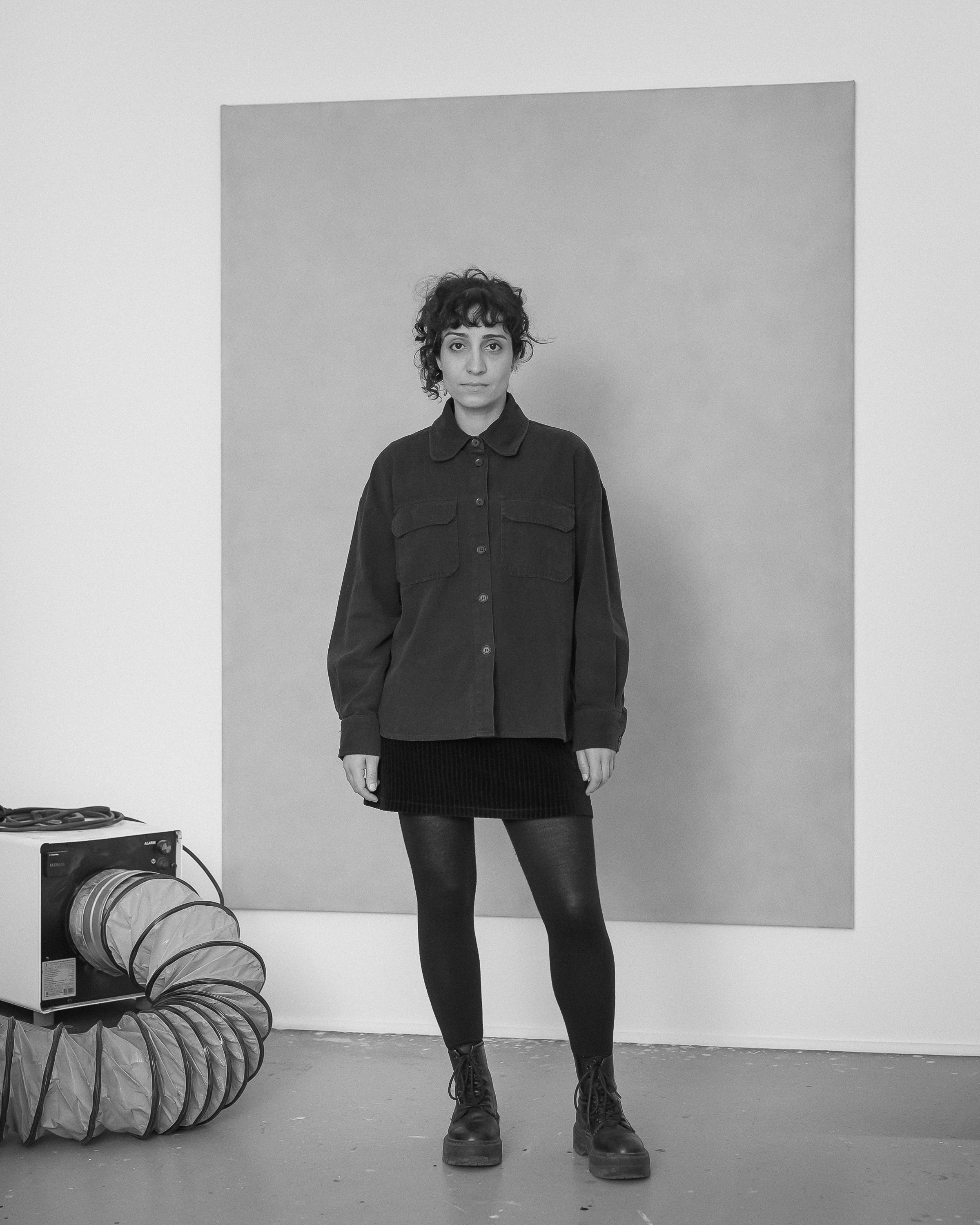
Toulu Hassani (*1984 in Ahwaz,Iran) lives and works in Cologne. She studied at the Braunschweig University of Art and at the Faculty of Fine Arts at the Polytechnic University of Valencia, completing her studies with Walter Dahn. International residencies have taken her to the ISCP in New York (2014), the CCA Andratx (2019), the Blank Residency Programme in Portugal (2023) and the Maison Marcelle (2025). From 2023 to 2024, she served as an interim professor of painting at the Academy of Fine Arts in Munich.
She has received numerous awards for her artistic work, including the Sprengel Prize for Fine Arts (2016), the Marianne-Defet-Malerei-Grant from the Kunsthalle Nuremberg (2022), the August Macke Prize from the Hochsauerland district (2023) and the ‘Catalogue Grant from the Lower Saxony Saving Banks Trust (2027). Her works have been featured in numerous national and international exhibitions and are held in major public and private collections, including the Kunsthalle Bremen, the Kunstmuseum Bonn, the ERES Foundation in Munich, the Museum Kunstpalast in Düsseldorf, the Museum für Konkrete Kunst in Ingolstadt, the Kunstmuseum Stuttgart, the Udo and Anette Brandhorst Collection in Munich, the Sprengel Museum in Hanover and the Von der Heydt Museum in Wuppertal.
Toulu Hassani works in the medium of painting. She draws on cosmic and astrophysical references and raises questions about infinity, causality and spatio-temporal orders. In her work, she is faszinated by the human endeavour to describe the world. In the search for an underlying order governing everything, numerous descriptive representations have been and continue to be created, and models developed, intended to depict and explain both the visible and the invisible. Her paintings can be read as allegories for the systems of order that we humans create to find our bearings in our world, and which relate to both the microcosm and the macrocosm. In doing so, the artist sets herself the complex task of thinking both within and outside these systems: order and disorder, rationality and emotion are not mutually exclusive, any more than plan and chance are. By navigating this field of tension through her painting, the human perspective and imprecision become imprinted on her paintings.