
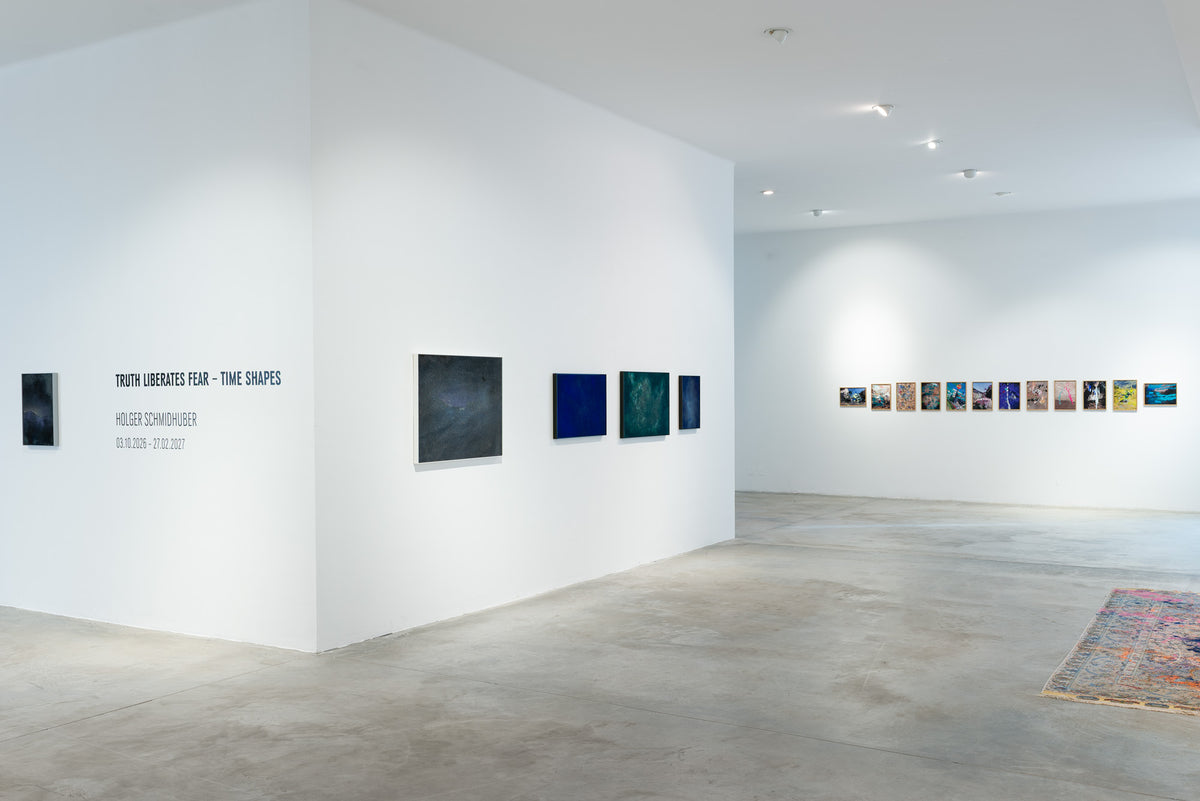
TRUTH LIBERATES FEAR – TIME SHAPES
Holger Schmidhuber
03.10.2026 – 27.09.2026
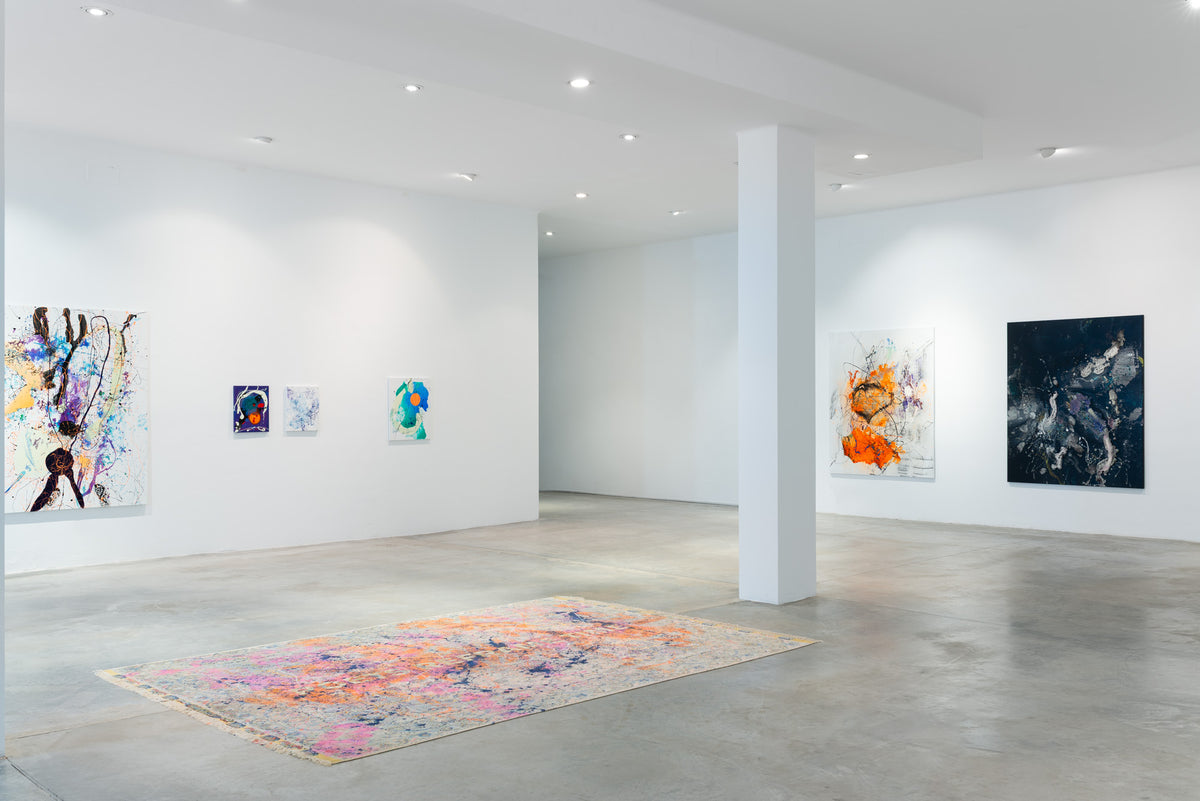
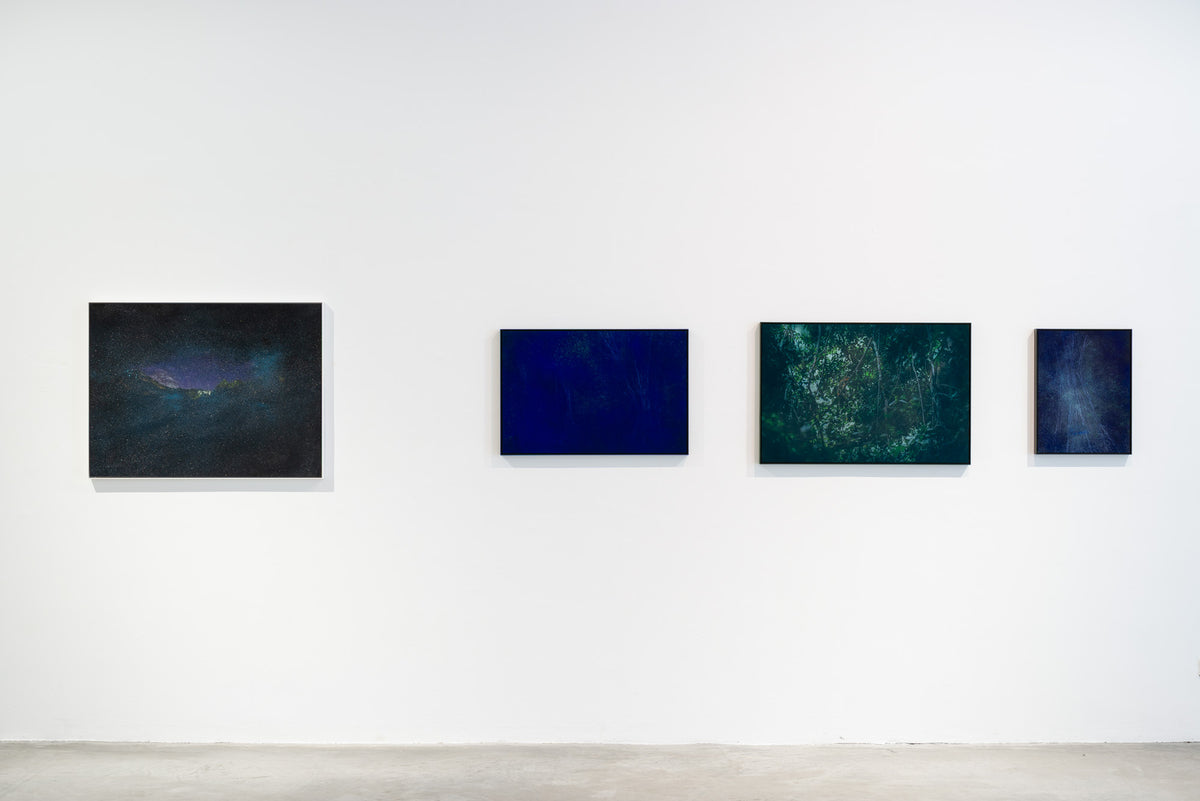
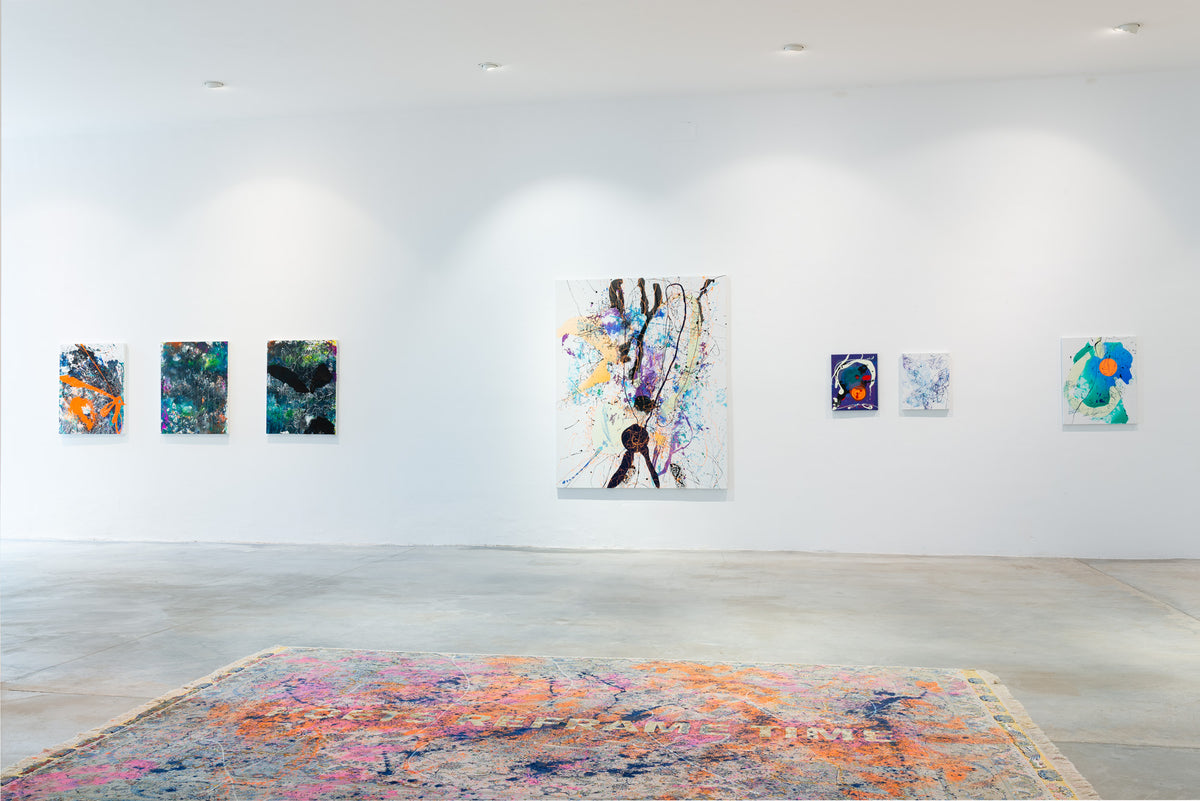
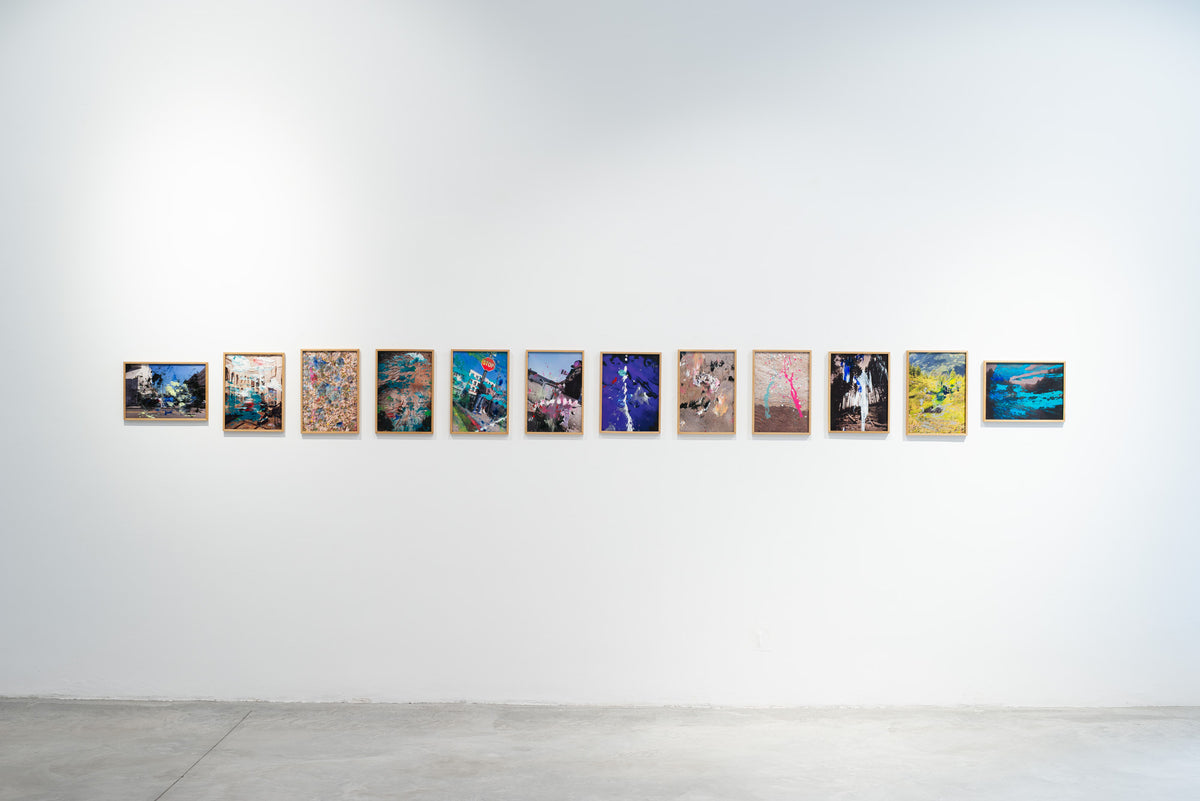
The exhibition TRUTH LIBRATES FEAR – TIME SHAPES brings together key bodies of work by Holger Schmidhuber. Painting, installation, photographic transformation, material experiments, and typographic works enter into dialogue, unfolding a multifaceted artistic cosmos in which individual positions complement and overlap one another, coalescing into an open-ended whole.
Schmidhuber‘s artistic practice operates at the limits of perception. As an artist, he is interested in the agency of the visible and the invisible, and in the spaces between definition and dissolution, memory and immediate experience. His work begins with specific places and photographic records, as well as historical objects, language, scientific models of thought, or digital systems. Through the artistic process, these elements are transformed and shifted into new contexts—onto a level that resists rational certainty.
Material is never merely the vehicle for an idea, but an active element of artistic thought. Color, surface, light, and space develop an agency of their own, shifting with every angle of view and every movement of the viewer. Perception appears not as a static representation of reality, but as an open process in a state of continuous transformation.
The exhibition title derives from an ongoing series of typographic permutations, which also includes the title of the recently published artist’s book Time Liberates Truth – Fear Shapes. This publication also points to a central challenge of our time: truth is increasingly contested, and, for precisely that reason, indispensable. It can deprive fear of the fertile ground of uncertainty and manipulation and offer a renewed sense of direction – while what time will shape from it remains open.
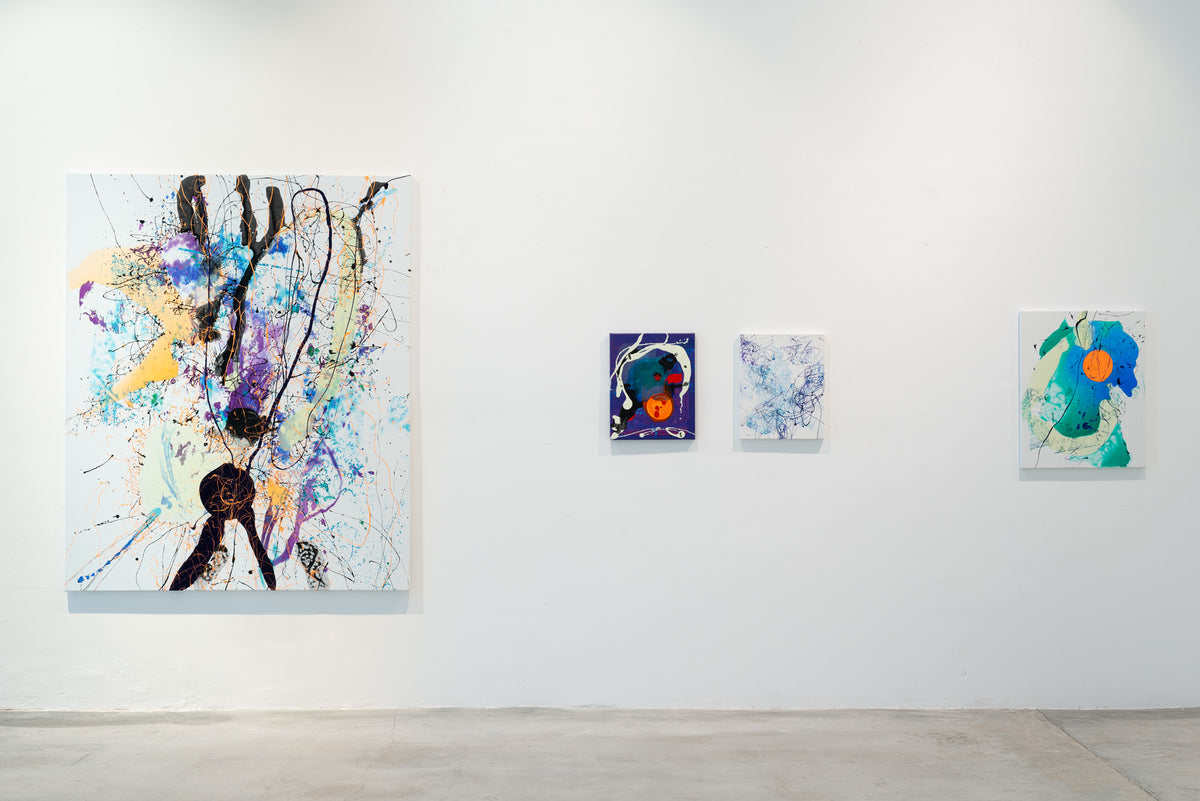
In the works created at CCA Andratx, the BLACK & WHITE INVERSIONS undergo a new painterly expansion. The fluid, transparent layers of color characteristic of the series are permeated by a new, more concrete language of forms, colors, and lines. Particularly in the black works, simple biomorphic forms in clear, elemental colors emerge between the different pictorial layers. Their sign-like presence carries a subtle resonance of Joan Miró’s visual language – less as a deliberate quotation than as a trace of Mallorca and the encounters experienced during the residency. In the white works, this expansion takes the form of fine, fluid lines swung through the air onto the canvas in a physical gesture. Some originate as words written into the air. Once they reach the canvas, however, they lose their legibility and transform into free, calligraphic movements. Language becomes gesture, writing becomes painting. A distant affinity with action painting remains perceptible, yet the movement is lighter, more precise, and more graphic.
Holger Schmidhuber’s (born in Germany in 1970) studied Painting and Communication Design at RheinMain University of Applied Sciences in Wiesbaden and at Parsons School of Art, Media, and Technology in New York. Since 2010, he has been Professor of Time-Based Media at Mainz University of Applied Sciences. His work has been presented in numerous national and international exhibitions, including Pinakothek der Moderne, Munich (D); Museum Wiesbaden (D); Kunsthalle at CCA Andratx, Mallorca (ES); the 7th Berlin Biennale (D); sommer.frische.kunst, Bad Gastein (AT); Simard Bilodeau Contemporary, Los Angeles (US); and AOA;87, Berlin (D).
Plan Your Visit
Just 30 minutes away from beautiful Palma
Estanyera 2, 07150 Andratx, Mallorca, Spain