The exhibition title Les parfmus, les couleurs et les sons se répondent was taken from a line by Baudelaire, from his Correspondances, a poem where the senses lean on each other. This excerpt functioned as a working instruction for the show.
Historically, art served to stimulate our sense of sight and, through it, our common sense and aesthetic sensibility. Still life, for example, has long offered a way to explore the sensory qualities of the objects portrayed: the softness of fabrics, the coolness of glass, the roughness of stone, or the brightness of a polished surface. Through figurative representation, artists sought to render images almost tangible, inviting viewers to imagine the physical presence of objects beyond the image itself. In recent decades, however, artists broadened their creative horizons, moving beyond figuration and naturalism to trigger a reaction. Through abstraction, new materials, sound, and even scent, they started to explore other ways to engage the senses and create more immediate and physical encounters with art.
A work of art is no longer simply an object to be contemplated; it has become something capable of suggesting a texture, a taste, or reproducing a sound. Even when an artwork cannot be physically touched, its material presence can awaken a particular sense: whether it be taste, touch, smell, hearing, or sight. In fact, in many of the works, it is sight that triggers the other senses.
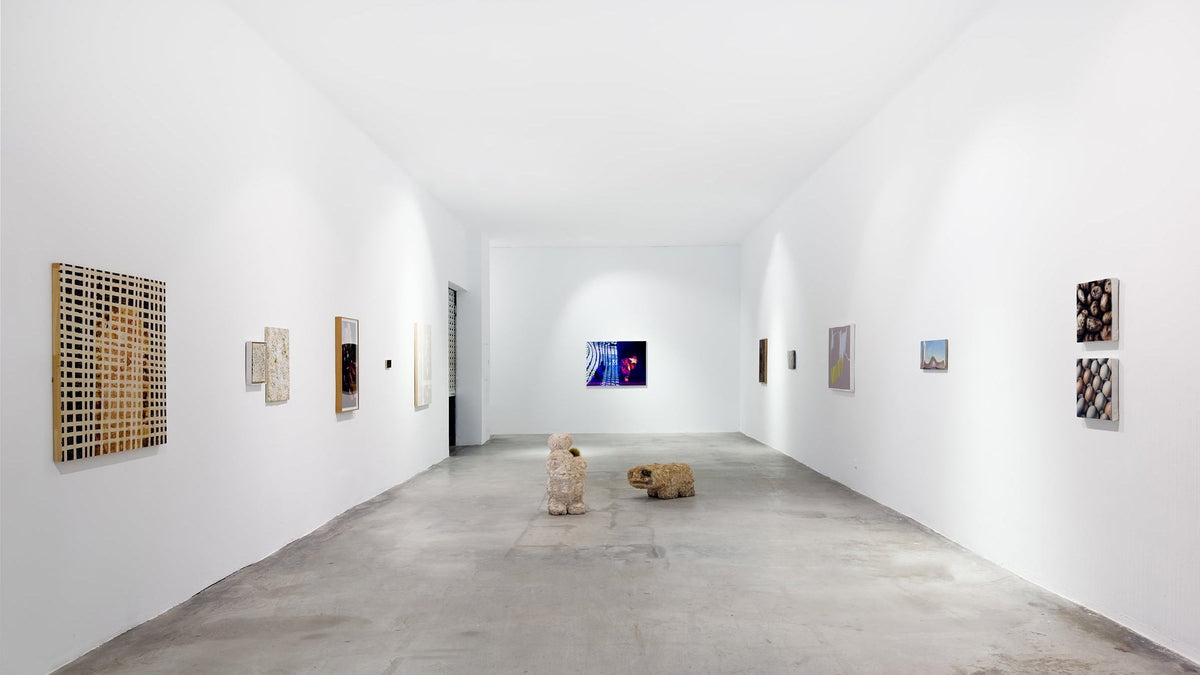
Most of the works here, indeed, are about surface. Concrete and lignite ash on a steel grid. Sand and glass pressed into canvas. Wool laid on black cotton, almost like moss. Two Mares limestone animals, still marked by the chisel, with a small cactus tucked into one of them. Viewers cannot touch any of it, of course, but can catch themselves doing it with their eyes anyway.
Standing near the black one, viewers encounter the scent before they have decided to look. Somewhere in the room, they will also hear the goats of Andratx, a bit of the village coming in uninvited.
None of the senses wins. You start with a color and end up thinking of a smell, or a texture you half remember.
Text by Esma Derdour and Darlyn Carreira Krause