The Burning Bush
Julius Hofmann
Curated by Michaela Kühn
28.02.2026 – 14.04.2026
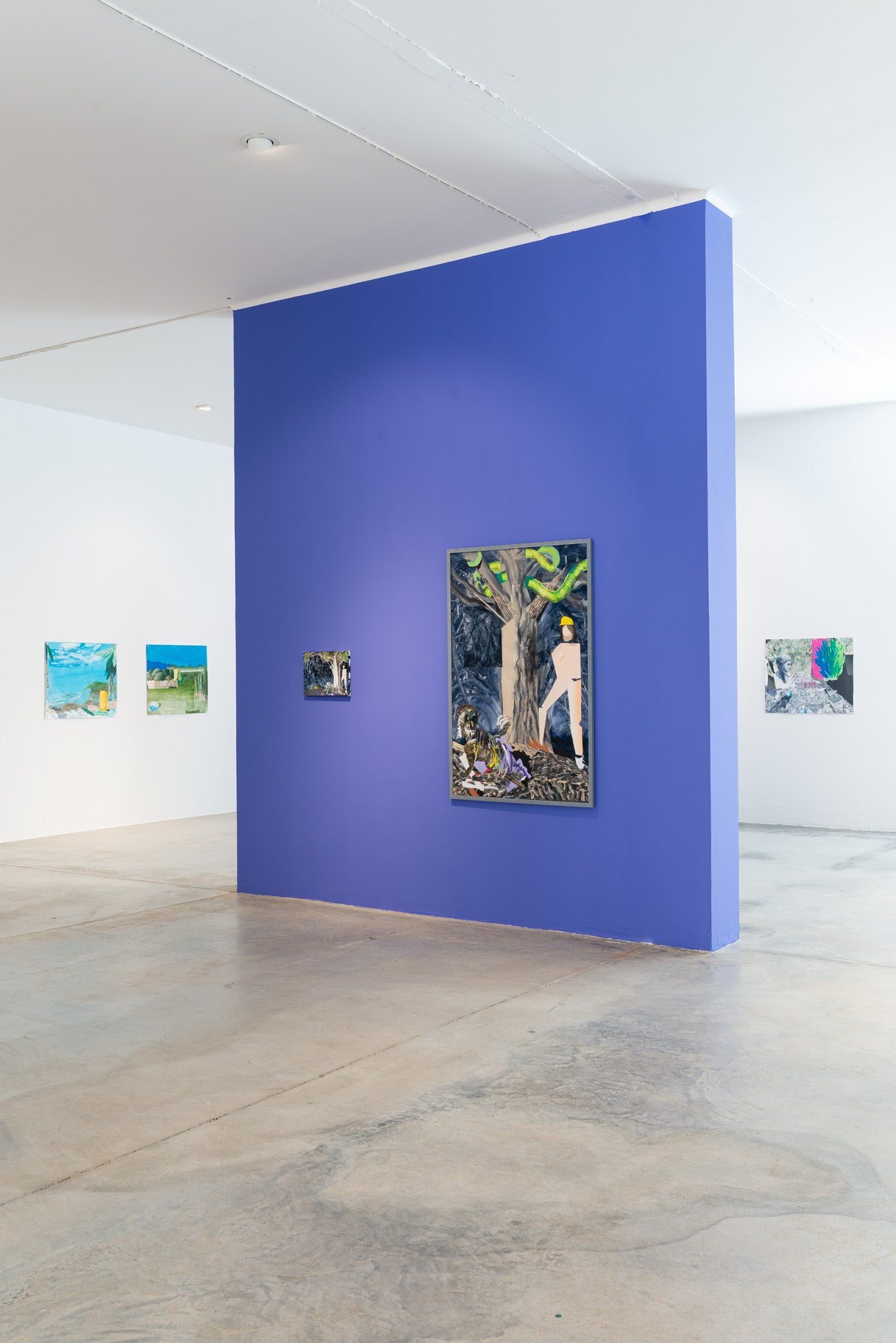
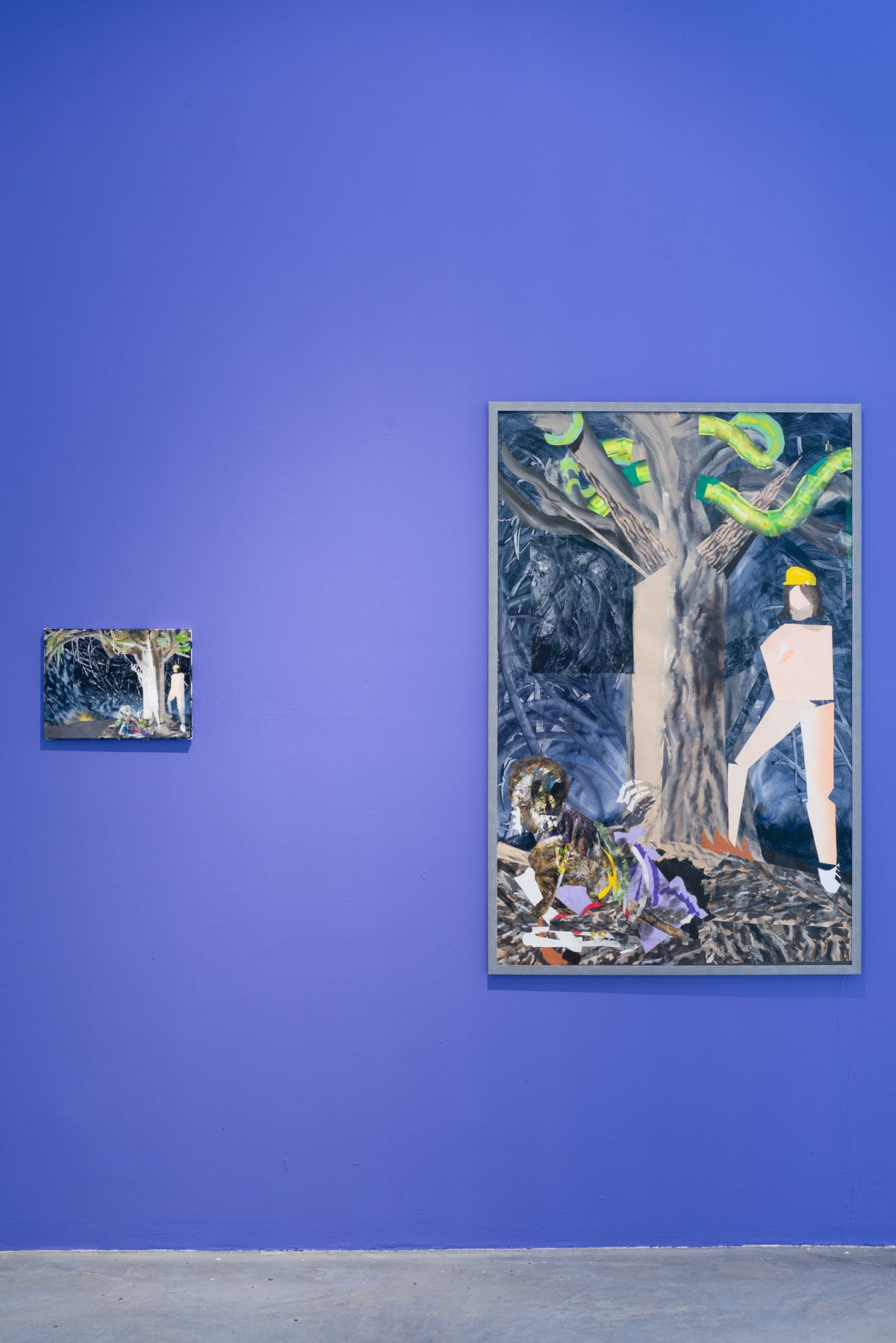
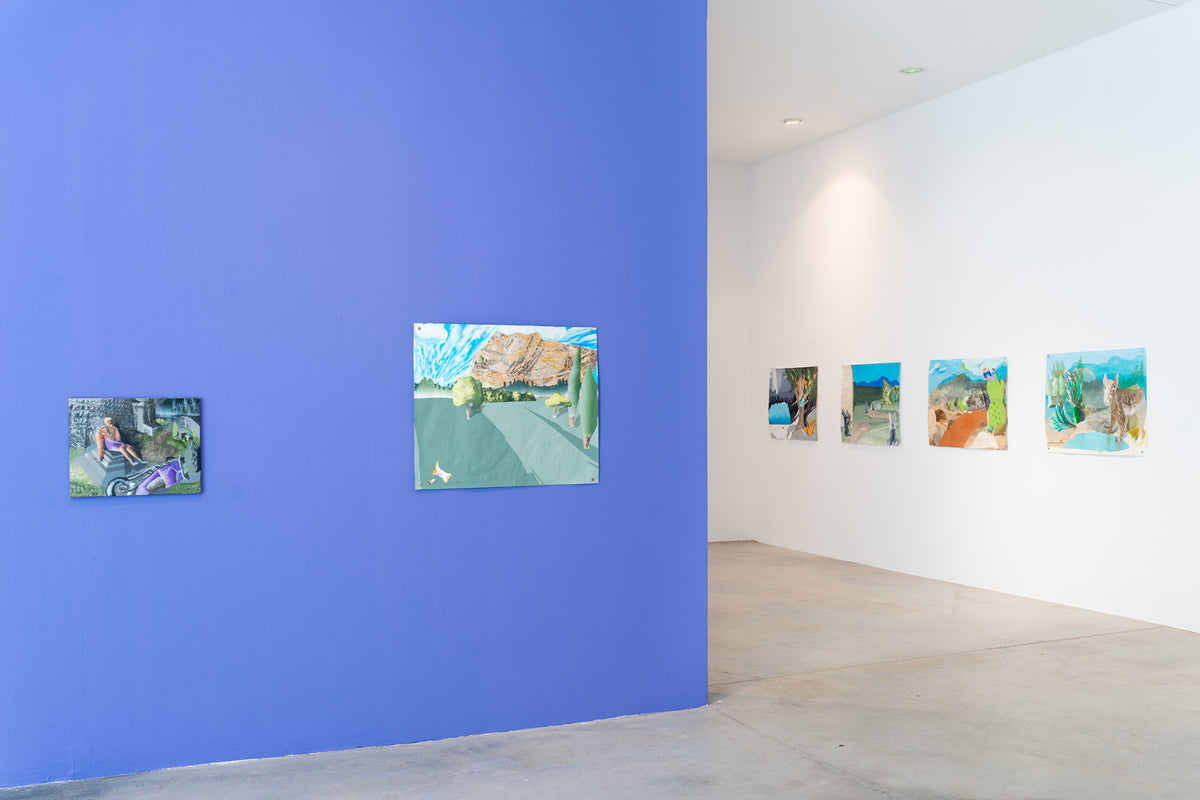
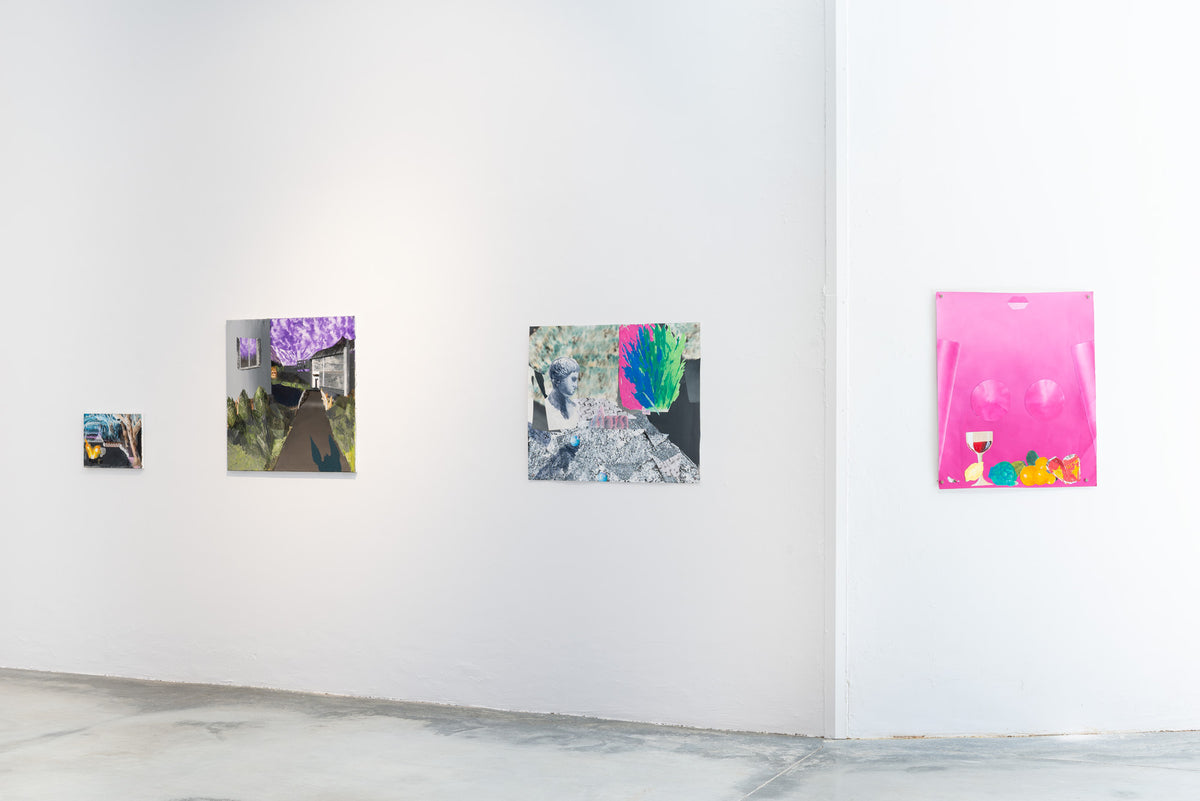
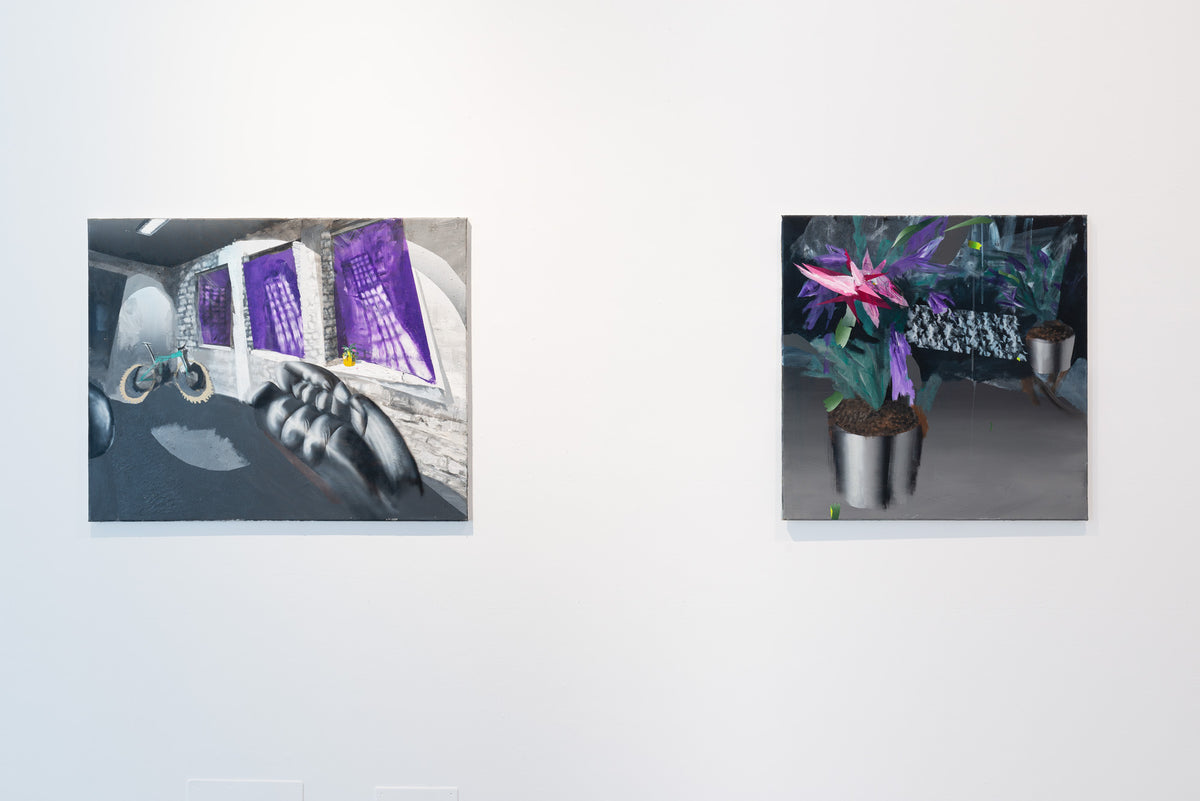
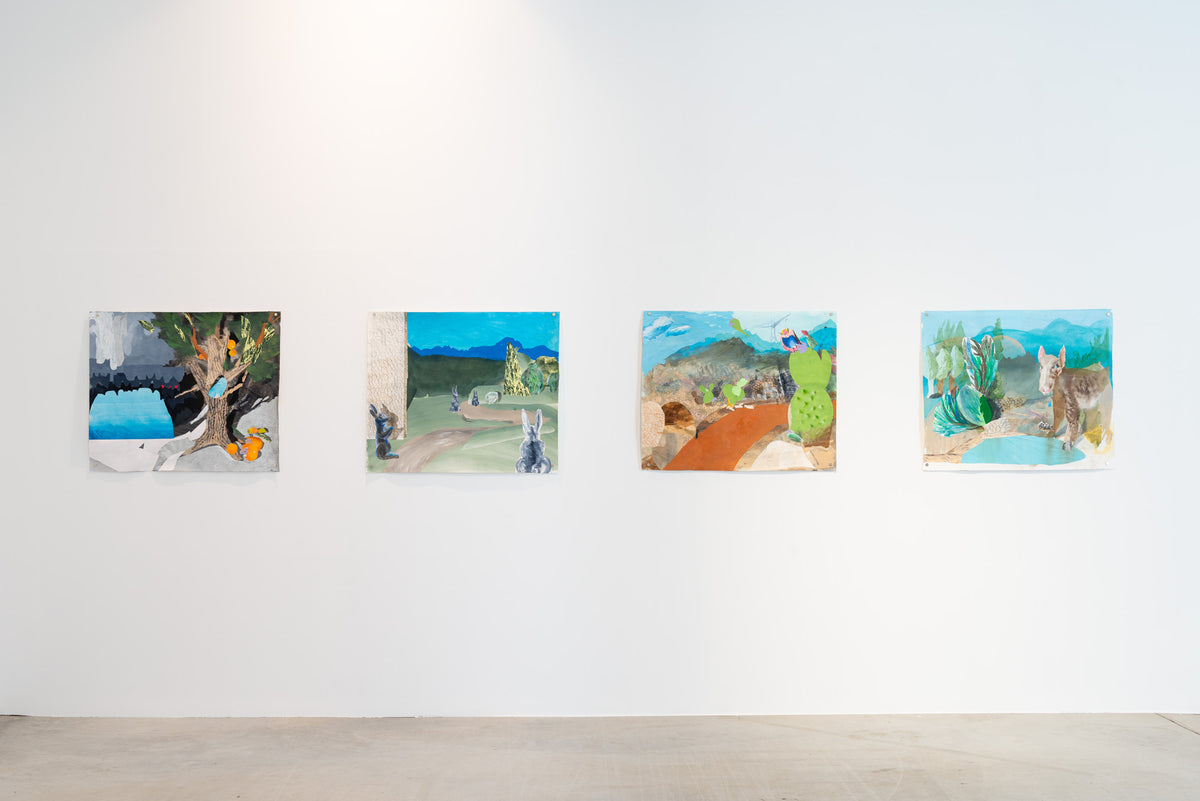
During his residency at CCA Andratx, Julius Hofmann created a series of multiple works on paper using collage, painting, and drawing techniques. These form the centerpiece of the exhibition and enter into dialogue with his canvas works. Hofmann’s works reflect a fragmented perception of an environment that can only be experienced in “shorts.” The collages break down the perfect Mallorcan landscape into digital artifacts comparable to the low-poly affine mapping of the PlayStation 1. Everything floats, wobbles, and eludes fixation—an acid trip through the remnants of post-digitalism. Nothing and everything are consumed: no here, no there—a limbo between lived memory and technically reproduced reality.
Portraying reality by depicting only its polished surface and not its crumbling core can't
possibly be the best way to approach representational painting!? Not in the 21st century, at least, when we’re well aware of the shipwreck that humanity has been steadily navigating toward. So, it would be only fair to include the grotesque defects permeating every aspect of present-day life when talking about it or portraying it. And this is precisely the idea behind Julius Hofmann's jittering, glitchy, error-ridden scenes of somewhat postapocalyptic, digitalized, absurd existence. Starting from the simple, usually grotesque symbol of an often-irritating aspect of contemporary life, Hofmann transforms this idea into a universal, visually pleasing amalgamation of traditional
painting and 90s computer graphics aesthetics.
(…)
The flawed nature of this language limited by the technical impotence of the machines proposed itself as a perfect “filter” to deconstruct and caricature the cracked contemporary life... by reducing the scene to vague metaphors, the distilled, ironic, and sarcasm-filled visuals are consciously using painting as a tool for communication by providing just enough info to hint at the idea.
(…)
The clash of creative energy and emotional charge that fuels the practice culminates in the collage-like technical approach to building pictures. By patching them up from individual, seemingly self-contained elements, and bringing harmony into the chaos, a decorative, aesthetically pleasing value is added to the paintings, alongside a range of conflicting emotions.”
Excerpts from the text Bogus cyber (de)mise-en-scènes by Saša Bogojev
Julius Hofmann masters the traditional aspects of painting and possesses a diverse repertoire of techniques. He challenges classical painting by contrasting it with the aesthetics of 1990s computer graphics and juxtaposing the simple, often grotesque symbols of those imperfect computer graphics with perfectionist, figurative painting. This approach lends his paintings something alienating and unexpected. Hofmann studied painting with Neo Rauch and Heribert
C. Ottersbach at the Academy of Fine Arts (HGB) in Leipzig from 2005 to 2011. He has presented numerous solo exhibitions in important institutions including at the Künstlerhaus Göttingen (2021) and Cinematic Cybernetics at the Museum of Fine Arts Leipzig (2018). Recent international solo exhibitions include Path not taken at Galerie Droste, Paris (2025); This, killing emptiness at Galerie Kleindienst, Leipzig (2023); Western Philosophies at Galerie Droste, Düsseldorf (2023); Purple Haze at Plan X, Milan (2022).